Apparel printing or embroidery: which method is right for your company apparel can't be answered in general terms. It depends on three things: the garment, the logo and how often the items are worn and washed.
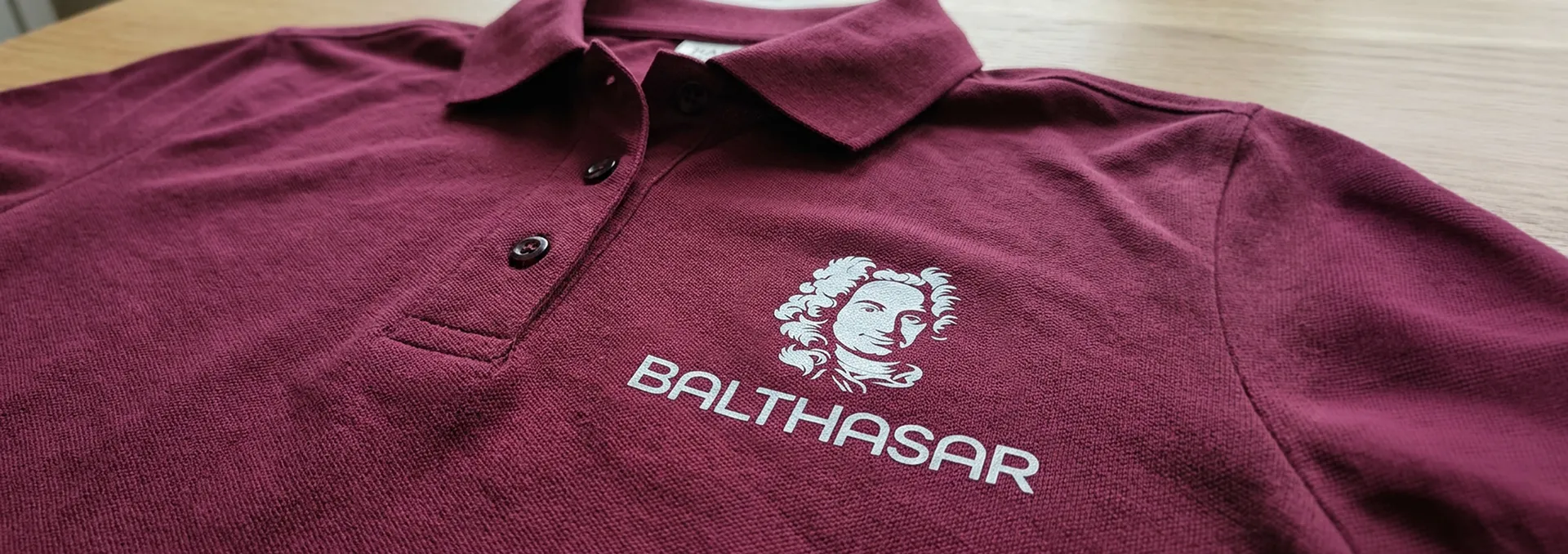
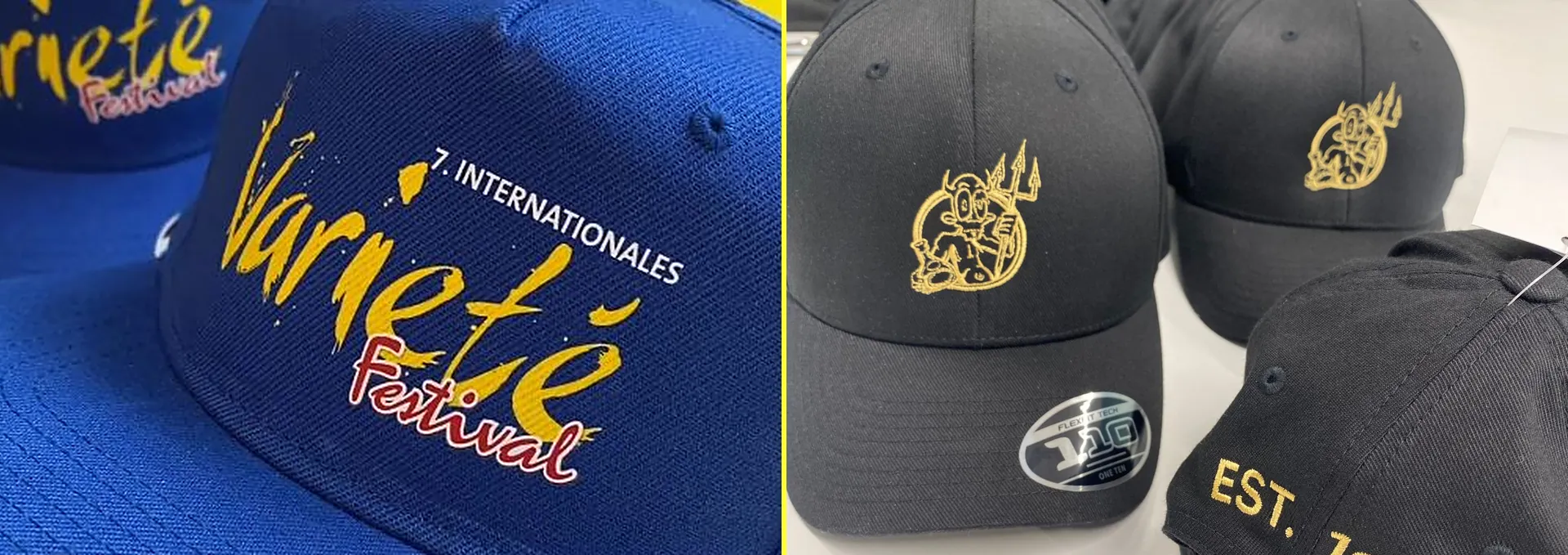
Our rule of thumb: Polo shirts, dress shirts, jackets and caps that are in use every day are usually embroidered. T-shirts, hoodies, large back designs and logos with gradients are printed. A combination of both often makes sense, too.
Embroidery
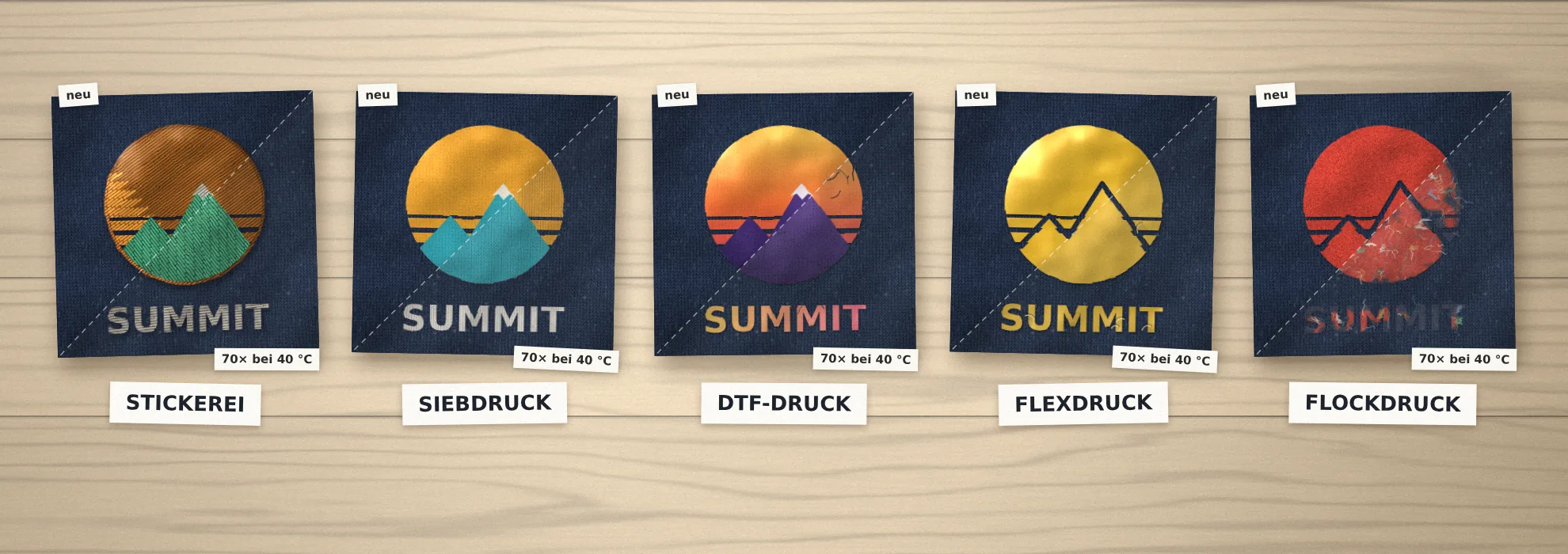
In embroidery, the logo is stitched into the fabric with thread. Embroidery is one of the oldest methods of decorating textiles and is done today for company apparel with computer-controlled machines. Beforehand, we create an embroidery file. It defines how dense the stitching is, which direction the stitches run and in what order the colors come. The file is created once and reused for every reorder. That's why the logo looks exactly the same on the fifth reorder as on the first order.
What speaks for embroidery:
- Very durable. The thread sits in the fabric. Nothing can chip off or come loose.
- Premium look. Embroidery is slightly raised and tactile. That looks premium, especially on polo shirts and dress shirts in customer contact.
- A consistent look for years. Thanks to the saved embroidery file, later orders match the first one.
Where embroidery reaches its limits:
- Very small lettering and fine lines. Lettering below about 5 mm in height becomes untidy. We have to simplify some logos a little for embroidery. We always agree on that with you beforehand.
- Gradients and photos cannot be reproduced with thread.
- Large areas are possible, but the embroidery file and stitching time become significantly more expensive. For a large back design, printing is usually the cheaper solution.
- Rain and membrane jackets: The needle pierces the fabric. With waterproof jackets, we therefore look at the material beforehand and recommend the right method.
You can find more about our embroidery on the page embroidery in Schweinfurt.
Apparel printing
In apparel printing, the design is applied to the fabric. For company apparel, we mostly use DTF printing (direct to film): the design is printed onto a film and then transferred to the garment with heat and pressure. For larger quantities with few colors, screen printing can also be the cheaper choice.
What speaks for printing:
- Any number of colors. Gradients, photos and detailed graphics are no problem.
- Large designs. Back prints and large front designs can be done well and affordably.
- Cheaper for T-shirts and hoodies, especially for larger quantities.
- Ready to go faster. No embroidery file has to be created.
Where printing reaches its limits:
- Flat look. A print is not tactile like embroidery and looks less elegant on a business polo.
- Care. A print lasts a long time if it is washed correctly. You'll find our tips in the post Caring for printed garments properly.
- Coated fabrics do not take every print well. Here, too, we check the material beforehand.
Apparel printing or embroidery: the comparison
| Criterion | Embroidery | Apparel printing (DTF) |
|---|---|---|
| Look | raised, tactile, premium | flat, smooth, vivid colors |
| Gradients and photos | not possible | no problem |
| Design size | ideal for chest, sleeve and cap; large designs possible but more expensive | large back and front designs, too |
| Durability | very high, cannot chip off | good with proper care |
| One-time costs | Embroidery file from €25 plus setup costs | Setup costs |
| Price per piece | usually higher | usually cheaper |
| Typical garments | Polo, dress shirt, fleece, softshell, cap, beanie | T-shirt, hoodie, jersey, event shirt |
What suits which use?
| Use | Our recommendation | Why |
|---|---|---|
| Polo shirt or dress shirt in customer contact | Embroidery | looks premium, stands up to daily wear |
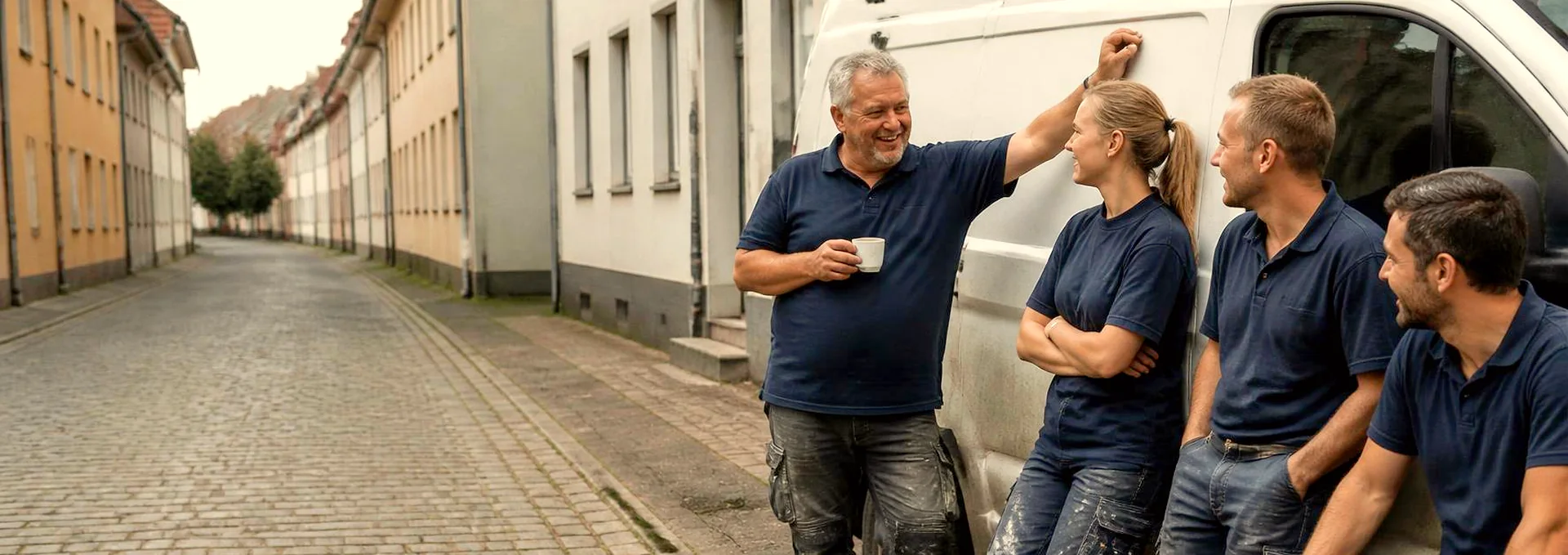
| Workwear | usually embroidery | durable with frequent washing |
| Fleece and softshell jacket | Embroidery | a compact chest logo suits the material well |
| Caps and beanies | Embroidery | looks best and lasts a long time |
| T-shirts and hoodies | Printing | large designs possible, cheaper in quantity |
| Event shirts, on short notice | Printing | no embroidery file, produced quickly |
| Logo with gradient or photo | Printing | technically the only way |
| Jerseys | Printing | light, stretchy, numbers and names easy to do |
| Large back design | Printing | significantly cheaper than large embroidery |
You'll find suitable garments for everyday work under Workwear, and polo shirts with your logo under Polo shirt printing.
Combining both
A proven solution: the logo embroidered on the front, and larger lettering, the web address or the phone number printed on the back. This way, the apparel looks premium in customer conversations and is still easy to recognize from a distance. Each position is priced individually.
What does it cost?
Whether apparel printing or embroidery is cheaper can only be said once we have your design. The price per piece depends on the garment, the quantity, the size of the design and the number of positions. The more pieces you order, the cheaper it gets. Our price tiers start at 26, 51 and 151 pieces.
One-time costs are added:
- Embroidery file, depending on the size of the logo: up to approx. 10 cm €25, up to approx. 20 cm €35, up to approx. 30 cm €55, larger €65. It is not charged again for reorders.
- Setup costs for setting up the machine: €14.95 for print or embroidery.
Embroidery is more expensive per piece because each piece is embroidered individually on the machine and the embroidery file has to be created first. In return, it lasts a very long time on apparel that is worn every day. We explain when which print pays off in the post What does apparel printing cost?
Which logo is suitable for what?
Good for embroidery: clear, compact logos with few solid colors and lettering from about 5 mm in height that are easy to read at a width of 5 to 12 cm.
Better to print: logos with gradients, shadows or photos, very fine lines or many colors, and anything that is supposed to be large.
If you're unsure, send us your logo. We'll tell you whether it can be embroidered as is or whether we should adjust it a little.
Frequently asked questions
Why is embroidery more expensive than printing?
An embroidery file has to be created once for every logo, and each piece is embroidered individually. The larger the logo, the more stitches and the longer the machine time.
Apparel printing or embroidery: which is better for polo shirts?
For polo shirts, we recommend embroidery in most cases. It looks more premium and stands up well to daily wear and frequent washing. Only for logos with gradients or very fine details is printing the better choice.
Can embroidery and printing be combined on one piece?
Yes. A typical combination is an embroidered logo on the chest and a print on the back.
Do I have to pay for the embroidery file again with every order?
No. You pay for the embroidery file once. We reuse it for reorders.
Can I have my own clothing embroidered or printed?
Yes, that is possible. Just talk to us beforehand so we can check the material.
Apparel printing or embroidery: still unsure?
Send us your logo and tell us which apparel it's about and how often it is worn. We'll get back to you with an honest recommendation and a quote: info@lamasuli.de