DTF printing in Schweinfurt
DTF printing / digital printing Schweinfurt
Because you want to know beforehand what your design looks like on the textile?
Bright colors. Fine details. And everything stays where it belongs – on the fabric. That is exactly what defines DTF printing. And that is exactly what we do at Lamasuli. With state-of-the-art DTF printing we put your design razor-sharp on T-shirts, Hoodies, Bags & more. Our DTF prints are flexible, durable and simply wow. For your brand, your team or your creative project. You do not need a complicated setup – just an idea. And if you are still missing the right design? Our graphic designer can work magic. Come by – at Lamasuli, your print shop from Schweinfurt with precision, power and personality.

The magic behind DTF printing
Have you ever wondered why some printed shirts fade after a few washes while others look like new for years? The answer lies in the printing technique. DTF printing (Direct-to-Film) is revolutionizing Apparel decoration with vivid colors and impressive durability. In Schweinfurt there are only a few experts who have perfectly mastered this innovative technique. Lamasuli is one of these specialists.
What makes DTF printing so special? With the direct-to-film process, your design is first printed onto a PET film with special inks. Then a thermoplastic adhesive powder is applied, which forms the perfect bond with the textile under the influence of heat. The special feature: the process requires no pretreatment of the fabric and allows photorealistic results on almost all materials – from cotton and polyester to blended fabrics.
DTF printing combines the best of two worlds. It delivers the color brilliance of digital printing with the durability that otherwise only embroidery offers. Even complex color gradients and the finest details are retained after many washes. The result is a print that not only looks good but also feels high-quality.
Do you want to find out more about the possibilities of apparel decoration? On the Blog of Lamasuli you will find exciting articles and inspiration for your own projects.
One method for (almost) every textile
One method for (almost) every textile The biggest plus of DTF? Versatility. The printing method is suitable for almost all textile surfaces: Which materials can I print? T-shirts, hoodies, polo shirts, caps, bags – DTF printing delivers what it promises. It works without any problem on cotton, polyester and blended fabrics. Even on dark fabrics you achieve brilliant results thanks to the white underbase.Unlike sublimation printing, which only works on white polyester, or screen printing, which requires minimum quantities, DTF masters almost every challenge. The technique solves a classic problem: it delivers consistent quality on a wide variety of materials.
We not only offer the printing but also support you in choosing suitable textiles. From the first draft to the finished product, you get everything from a single source. Discover now how DTF printing takes your textile projects to the next level – with brilliant colors, durable results and maximum flexibility.
Would you like to know which is better for company clothing, apparel printing or embroidery? Then you will find a good guide here.
Here are the latest products decorated with DTF printing
Feel free to pick one and get inspired. Depending on the purpose, occasion and size of your wallet, we recommend the right products and decorations.
-
Graduation hoodies -
Calendars -
Keychains -
Mouse pads -
Laptop bags -
Travel mugs -
USB flash drives -
Power banks -
Flashlights -
Scarves -
Ear warmers -
Scented candles -
Gloves -
Backpacks -
Water bottles -
Sweatshirts -
Blankets -
Umbrellas -
Notebooks -
Work jackets -
BBQ aprons -
Bags -
Pants -
Bathrobes -
Slides -
Safety vests -
Towels -
Jerseys -
Socks -
Jackets -
T-shirts -
Polo shirts -
Hoodies -
Caps -
Beanies
FAQ about DTF printing
Here you will find the most common questions, which we have gladly put together for you.
What is DTF printing?
DTF stands for “Direct to Film”. A design is first printed onto a special film, then dusted with hot-melt powder, dried and then transferred to textiles using a transfer press.
Which textiles are suitable for DTF printing?
DTF works on almost all types of textile – cotton, polyester, blended fabrics, nylon – and even on dark fabrics, without any pretreatment being necessary.
What are the advantages of DTF over other printing methods?
DTF printing is particularly versatile – it works on almost all types of fabric and delivers brilliant colors and fine details, even for small runs.
Unlike other methods, no pretreatment is necessary, which saves time and makes production more flexible.
Ideal for one-off pieces, series or quick reorders with high wash resistance.
Can I also print complex designs and color gradients with DTF?
Absolutely. DTF is excellently suited to photorealistic designs, color gradients and very fine details – including transparent or white areas.
Are there restrictions on the size of the design?
The maximum print size depends on the DTF printing machine used – formats up to A3 or even larger are usually possible. Ideal for chest, back or all-over designs. With us you can easily have a 15XL shirt printed.
Does the print feel rubbery or flexible?
DTF transfers feel soft but slightly rubbery – similar to a high-quality screen print.
The design remains flexible and adapts well to the fabric.
Linked blog or guide articles:

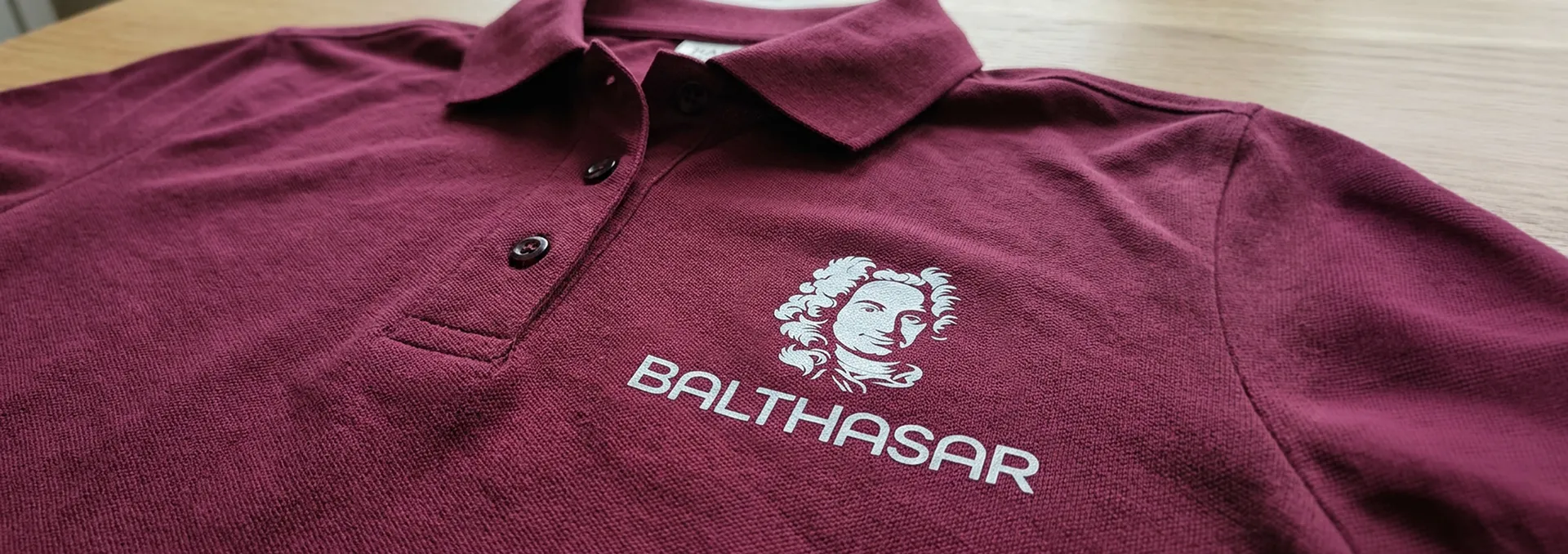
Placing your logo on team apparel: why every centimeter counts
Placing a company logo on a polo shirt? Sounds simple at first. If you want to add a logo to team apparel, you just need to find the right spot, right? In fact, there’s more to it
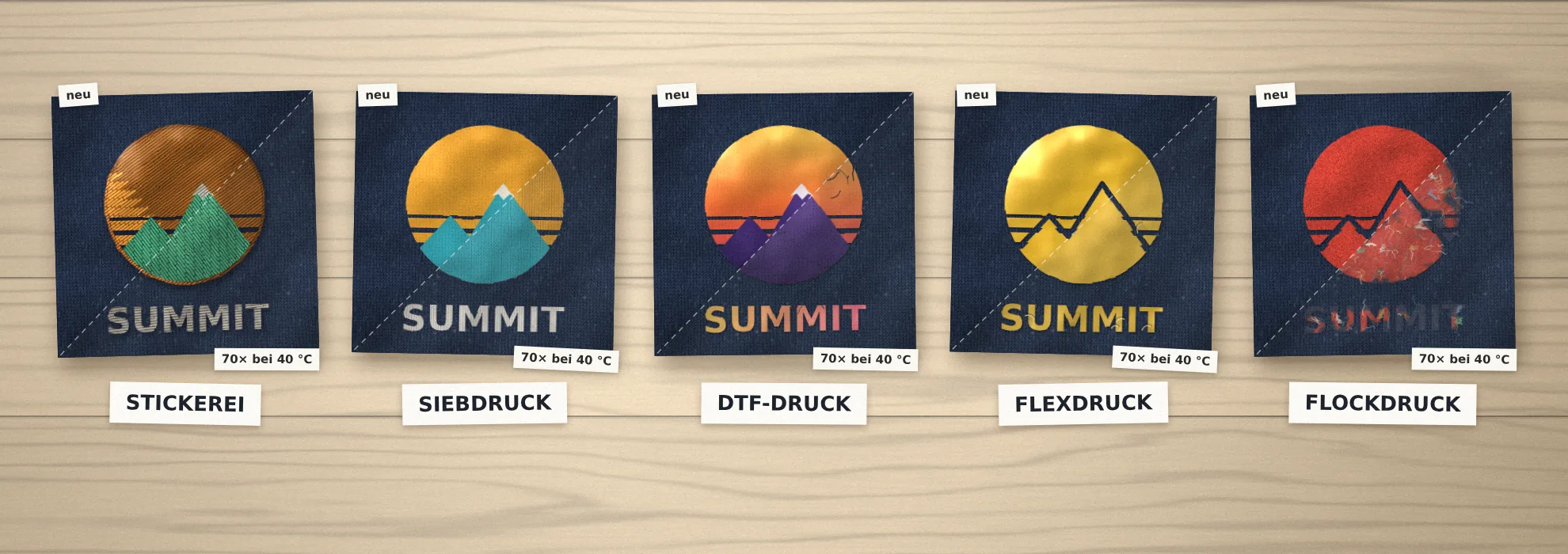
Which decoration method suits your occasion?
Every apparel decorator promises “high quality”. We’d rather give you an honest overview of the common decoration methods and tell you what each one can do and where it reaches its limits. Then you’ll find
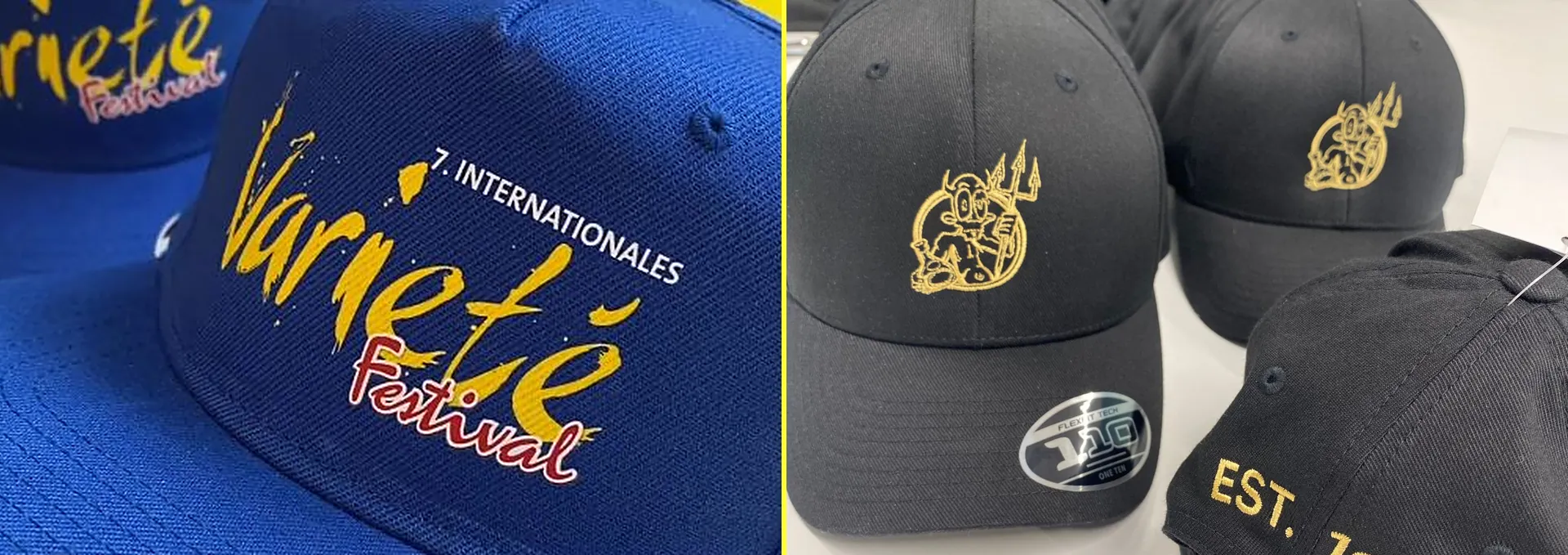
Apparel printing or embroidery for company clothing?
Printing or embroidery: which method is right for your company clothing can’t be answered in general. It depends on three things: the garment, the logo and