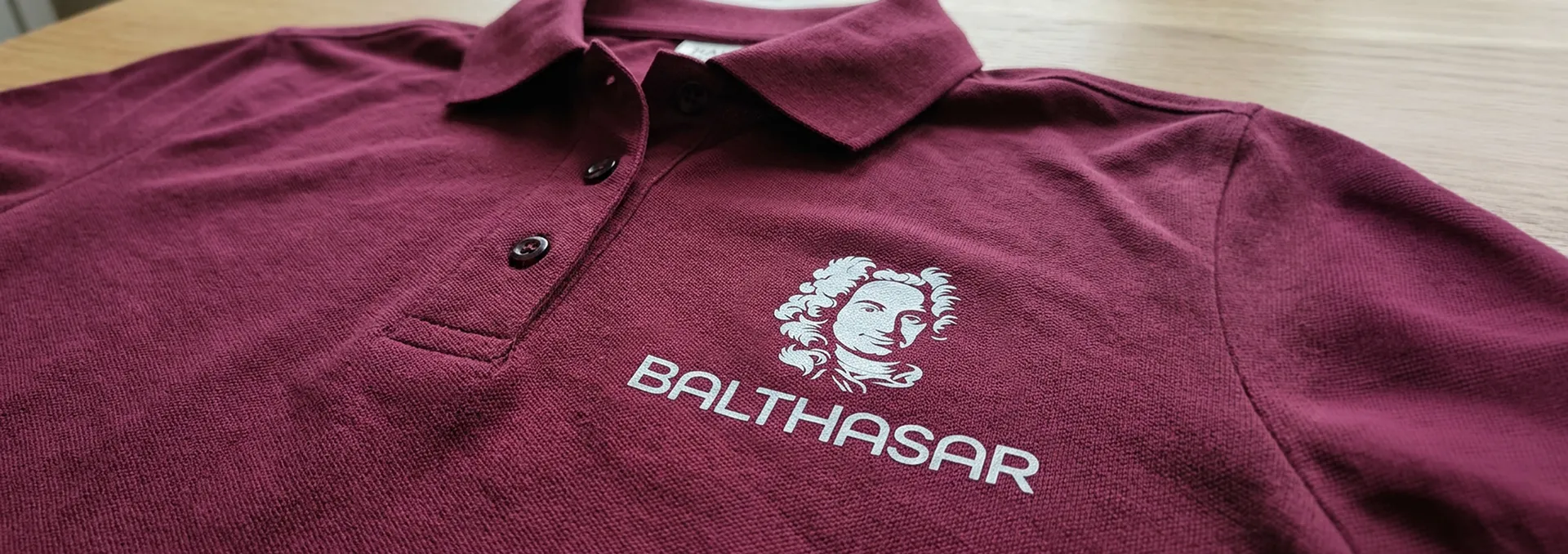
Last month, a customer stood in our store, put a shirt on the table and said:
“The print is coming off. That can't be right.”
He was convinced he had done everything right. No fabric softener, no extreme washing, everything completely normal. The garment smelled neutral and looked well cared for at first glance. Still, the print had cracks. Not classic peeling, but fine breaks in the design. We already knew exactly this kind of damage.
As chance would have it, shortly before that we had been traveling ourselves and had to wash laundry at a public laundromat. And yes, dry it too. In their big dryers. Something we otherwise deliberately avoid with decorated apparel. When we took the items out of the dryer later, they looked exactly like the complaint on the table. Same cracks, same structure in the print.
Since then, we've been telling this story more often. Not as an excuse, but as an explanation. Because with apparel printing, quality doesn't end with the last step in the workshop. It depends crucially on what happens afterward.
Especially here in Schweinfurt and in the area around Würzburg, Kitzingen or Haßfurt , we support many companies, clubs and teams over the long term. And again and again we notice: care determines whether a print looks good for a long time or causes problems after just a short while.
Why prints peel or crack – typical everyday mistakes
When something happens to the print on apparel, it looks the same to many people at first. The print no longer holds properly, spots look damaged, the design changes. In the workshop, we distinguish very precisely such as damage occurred.
If a print peels off over a large area, the cause is often the bond between garment and print. If, on the other hand, fine lines crack in the design, much points to excessive heat or strong temperature fluctuations. Both look similar in photos but have different causes.
When garments are printed, the design is firmly bonded to the fabric under heat. That withstands a lot in everyday life. It only becomes a problem when strong heat comes into play again and again.
High wash temperatures, fabric softener or long dryer cycles take their toll on the print over time. The surface becomes soft, the fabric moves and at some point the print can no longer compensate. You later see this as cracks or changed areas in the design.
What many underestimate: friction also plays a role. If the washing machine is packed very full, garments rub hard against each other. Combined with heat, this creates a strain no apparel print is made for. This shows quickly, especially with T-shirts, Hoodies or sweaters that are worn and washed regularly.
Many want to have their garments printed cheaply and still expect everything to last forever. The print itself can be high quality, the colors clean, the design executed correctly. But if the items are constantly washed too hot or treated incorrectly in everyday life, it shows sooner or later. That then has less to do with the execution than with the handling afterward.

What apparel printing really withstands – and what it doesn't
Many think printed apparel is delicate. In truth, modern prints withstand quite a lot in everyday life, if you treat them right. What matters is less the individual wash cycle than what is repeated over weeks and months.
When you have garments printed, your design is firmly bonded to the fabric under heat. That holds without problems in normal everyday life. Difficulties only arise when the products are exposed to extreme conditions again and again.
What our prints handle without problems
- Washing at up to 40 degrees
- Normal spin cycles
- Regular everyday wear
- Brief heat, for example to remove wrinkles
Even if a tough stain lands on a shirt, the print can, as an exception, also handle a 60-degree wash cycle. But that should remain the exception and not become routine.
Where it gets critical
- Constant washing above 40 degrees
- Fabric softener in the wash
- Very fully packed washing machines
- Long dryer cycles at high temperature
Heat in particular has an effect. The adhesive that bonds the print to the garment reacts to it. If it softens again and again, the surface of the print changes. Cracks or brittle spots often only show after several wash cycles.
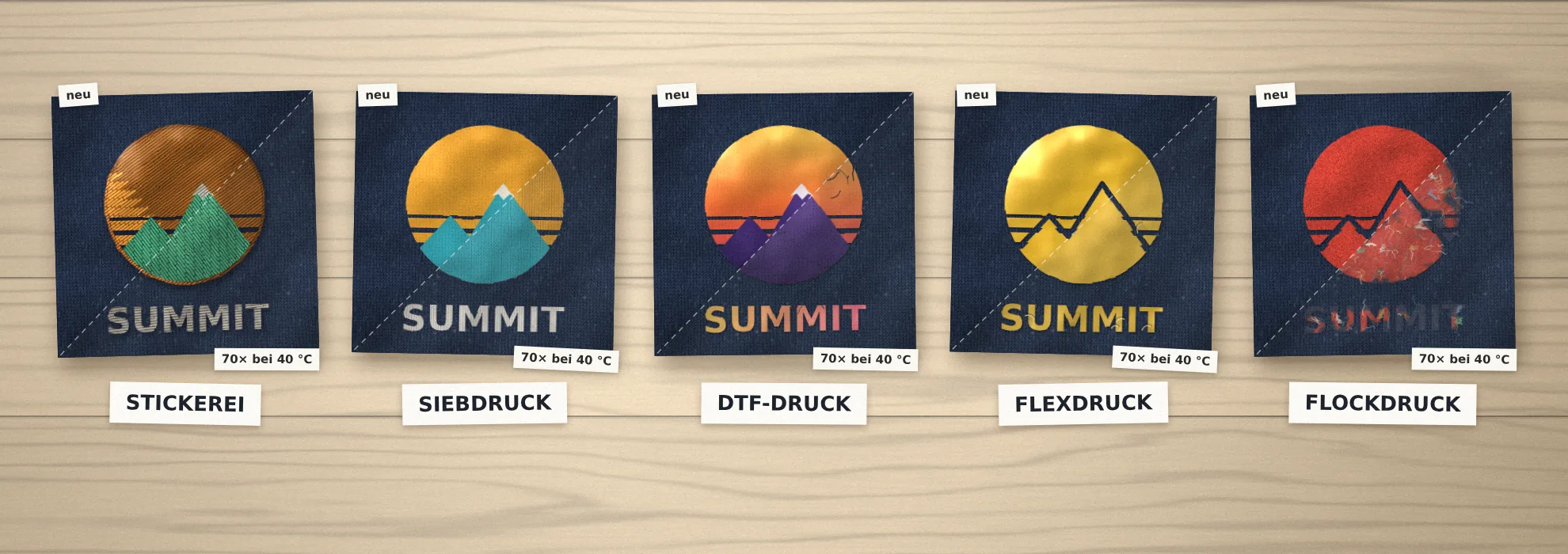
This is quickly noticeable especially with hoodies, sweaters or shirts with large designs. Large print areas are subject to more movement and simply react more sensitively to high temperatures. Do you regularly wash hotter than 40 degrees? Then embroidery is the safe choice; it even withstands hot washes up to 95 °C. What embroidery, screen printing, DTF and flock look like after up to 100 washes is shown in our interactive wash test.
The biggest enemies of printed garments
There is one combination where even the highest-quality apparel print eventually gives up. And we see exactly this mix in complaints again and again.
The worst wash combination consists of:
- too high a wash temperature
- fabric softener
- a washing machine filled to the brim
When these three things come together, the print hardly stands a chance. The heat softens the adhesive bond, the fabric softener intensifies this effect and the strong friction does the rest. The print is not destroyed immediately, but it loses stability. The result often only shows after several wash cycles.
Many who want to have garments printed underestimate exactly this point. The apparel print itself is rarely the problem. What matters is how the apparel is treated in everyday life.

Printed garments and the dryer: briefly okay, too long problematic
One topic we have to explain again and again is the dryer. It is not forbidden in principle, but it should be used deliberately.
Our recommendation is clear and simple:
- a few minutes at most
- only to smooth out wrinkles
- then take it out immediately
- pull it into shape
- let it air-dry
That is completely sufficient. If, on the other hand, apparel is dried until it is completely dry, high heat acts on the print continuously. As a result, prints become brittle over time or fine cracks appear.
We've experienced it ourselves. At a public laundromat, on vacation, for lack of an alternative. Afterward, the decorated garments looked exactly like the complaint pictures we had seen before. Since then, we've known exactly how this kind of damage comes about.
Apparel decoration: why we look closely at complaints
We are generally accommodating. Really. If something isn't right with an order, we look closely and work on a solution together. At the same time, we've learned over the years that not every complaint is the same.
In apparel printing, we know pretty exactly how certain kinds of damage come about. Cracks in the print, brittle areas or designs coming loose often tell a clear story. And it usually has less to do with the apparel print itself than with what happened afterward.
That's why we always check complaints carefully. This includes asking how the items were washed. The care instructions are enclosed with every order. For larger orders for companies or clubs, we often also pass them on via WhatsApp so they land right in the group chat. That way, everyone involved has the same information.
Especially with club apparel or garments for teams, the responsibility lies not only with us but also with the customer. Anyone who has garments personalized passes the apparel on. And with it the responsibility to pass on the instructions. We address this openly, without wagging a finger, but honestly.
Our experience shows: care instructions make the difference. If they are ignored, we see it in the result. That is exactly why we look closely at complaints and decide fairly but consistently.
How the print stays beautiful for a long time – our simple care routine
It's really not rocket science. If you treat your apparel normally, you'll enjoy it for a long time. Whether T-shirts, hoodies or sweaters for customers, companies or teams.
Our care routine is deliberately kept simple:
- Wash at 40 degrees maximum
- No fabric softener
- Briefly in the dryer, only to remove wrinkles
- Pull into shape right afterward
- Let air-dry
That's all it takes. The colors stay bold, the logo keeps its shape and the print still feels good after many wash cycles. That is exactly how we picture quality when we print garments.
Many customers come to us with questions about care, durability or everyday suitability before they have garments printed. In personal conversations in particular, it quickly becomes clear that good results depend not only on the print but on the interplay of material, design and care.
If you have your garments printed nearby, you have an advantage for exactly that. In Schweinfurt and in the area around Würzburg or Haßfurt, we often explain these things directly in a personal conversation. That way, everyone knows what matters.

Conclusion: care determines how long apparel printing looks good
When garments are printed, it's not just the Printing itself that counts. How the apparel is treated later is also decisive. It is worn, washed and put on again and again. That's exactly what we make it for. With the right care, colors and designs still look good after a long time.
Whether T-shirts for a company, hoodies for a club or sweaters with a logo for businesses: anyone who has garments decorated or personalized should take the few simple care steps seriously. They make the difference between apparel that stays in use for a long time and products that show problems early.
Many of our customers approach us with questions about durability, quality or care before they decide. Especially in personal conversations, we notice how important this information is and how much uncertainty it helps avoid.
Want to have garments printed? Then get in touch with us. We'll guide you from selection through design to care. On site in Schweinfurt and for customers from Würzburg, Haßfurt and the surrounding area, or with no fuss at all if you'd like to request apparel printing online.